

Chinnaswamy Dew, Kishan's Spin Problem and Mayank's Real Overs

Published 2026-11-01 · By Rhea Saxena ( Quantitative Sports Editor · New Delhi Desk)
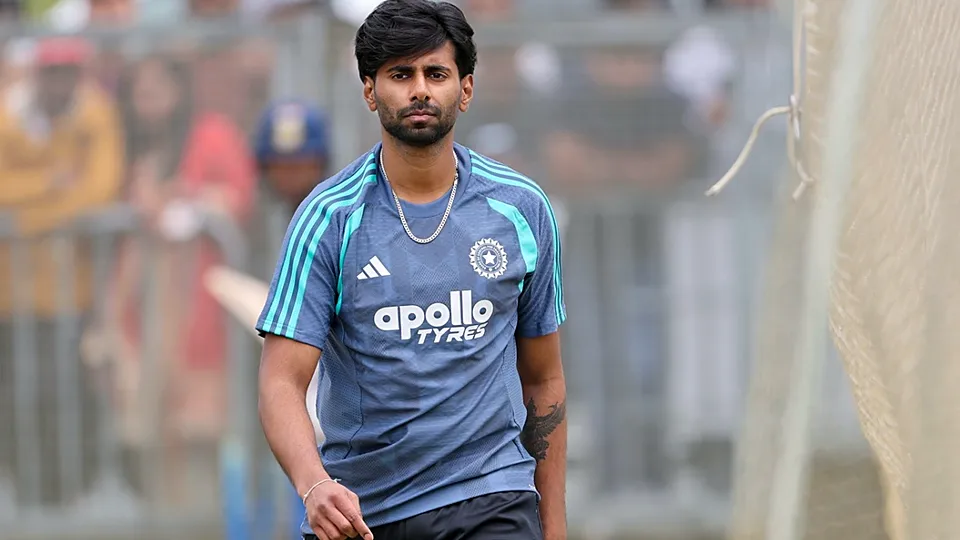
Two overs into the chase at the M. Chinnaswamy on Sunday night, the ball was already a bar of soap. India chose to bowl — Mayank Yadav in, Ishan Kishan in, Bhuvneshwar Kumar out, the teenager Vaibhav Sooryavanshi out. The toss got the airtime. The number that deserved it was 6.94.
That is the spin economy here in overs 7 to 15 across the last twelve night T20s — roughly 1.1 runs an over cheaper than pace in the same window. Everyone in the box was talking about the new ball. At this ground, the new ball is mostly a rumour.
The New-Ball Story Is a Decoy
Wickets in the first six overs feel like momentum. They are mostly theatre. India's powerplay economy at home since the 2024 World Cup sits around 8.4; the middle overs sit around 7.1. The game does not break in the sixth over. It congeals between the eighth and the fifteenth, when the field goes out, the ball softens, and a captain has to decide whether his spinner bowls to a left-hander with the short boundary on one side.
Chasing sides win about 67% of night games here. Strip out the ones where dew arrived before 8:30 PM IST and that drops to 44%. Same ground. Same format. Different physics.
| Phase | Run rate | Boundary % | Spin economy | Pace economy | Share of sixes |
|---|---|---|---|---|---|
| Powerplay (1-6) | 8.61 | 21.4 | 8.92 | 8.41 | 31% |
| Middle (7-15) | 7.38 | 12.8 | 6.94 | 8.07 | 29% |
| Death (16-20) | 11.24 | 26.9 | 9.61 | 11.48 | 40% |
Benchmark: last 12 night T20s at the M. Chinnaswamy, all teams. Boundary % is runs off fours and sixes as a share of balls faced.
Why the Middle-Overs Choke Keep Happening
Dew is the whole argument for bowling first, and it is also the reason the spin overs must be front-loaded. Kuldeep Yadav and Varun Chakravarthy are not defensive picks in overs 8-14 — they are the only bowlers who can grip a dry-ish ball before the outfield turns into a wet towel. Entry points matter more than the matchup sheet: get Varun on immediately after the powerplay, not in the 16th over when the ball is a slip hazard and the batter knows a mishit clears the shorter side.
The cliché is "hold your spinner for the death". At the Chinnaswamy, the death is exactly where a wrist-spinner becomes a slot machine.
Kishan vs Left-Arm Spin Is the Real Bet
Here is the selection that should worry the Indian dressing room. Since 2023, Kishan strikes at 112 against left-arm orthodox in T20 cricket. Against pace he goes at 149. New Zealand have Mitchell Santner and Rachin Ravindra, and Santner in particular has a habit of bowling the 9th, 11th and 13th overs to a left-hander who wants to slog-sweep. That is not a matchup India win; it is one they survive.
- Kishan vs left-arm spin since 2023: 112 strike rate, dot-ball pressure well above his own baseline.
- Kishan vs right-arm pace, same window: 149 strike rate, a boundary every 5.8 balls.
- India's middle-overs run rate when Kishan faces 10+ balls of spin: 7.0.
Leaving out Sooryavanshi is defensible on workload grounds. But he is the one young batter in that squad who attacks spin over the top rather than sweeping into the sweeper. On a track where overs 7-15 decide the game, that is a genuine cost — the kind that never shows up on a scorecard.
Mayank's Hard Length Belongs at the Death
Mayank Yadav's value is not the first over. His skiddy hard length — hitting the deck at 148-152 kph, tailing in late — is a death weapon, because at the Chinnaswamy the gap between a yorker and a length ball is one inch of turf and the batter's ego. Since IPL 2024 his economy in overs 16-20 is 8.4; in the powerplay it is 9.3. Bumrah takes 1, 17 and 19. Mayank should take 16, 18 and 20.
There is no Impact Player safety net in an international. If Mayank sprays, India bowl the last over with a part-timer and the game leaks. That risk is still worth it — the alternative is 118 kph knuckleballs at the death, which is a slower, sadder gamble.
The House Edge Is Dew
New Zealand bringing Nathan Smith back for Kyle Jamieson is a tell. Smith bowls the hard length and bats at eight; Jamieson's bounce is less useful once the ball stops climbing after 8:30 PM IST. It is a dew pick as much as a form pick, and the sort of call that looks obvious only in hindsight.
Chasing here once the dew lands is a bit like putting your chips on red at a bengaluru live casino club: the wheel is honest, the odds are not, and the house edge has nothing to do with how confidently you shout. India have chosen to bowl. The first six overs will decide nothing. The nine after them decide everything.
Related coverage
- Heaphy’s Grit and a Bad Light Heist: India A Robbed of a Win
- IPL Record-Breaking 100s: 5G Spikes & The Bengaluru Live Casino Club Effect

Updated 2026-11-01 · Instant Rupee Deposits & 60s Withdrawals · 24/7 Support.
Access Official BangaloreClub Portal →IPL Auction & Fantasy Strategy Editor · Kolkata Desk
Harsh Sen has tracked IPL auctions, T20 toss trends, and fantasy combinations since 2016. From Kolkata, he oversees BangaloreClub's live match previews and bengaluru live casino club guides.
Reader Discussion & Match Reactions (6)4.7★ Community (6 Comments)
Verified Indian cricket reader perspectives & tactical debate on selectbangaloregirls.com
Rhea talks about dew but ignores the BCCI's stubborn refusal to rotate Kishan into a fixed middle-over slot despite the 6.94 economy. If you bowl a lefty with that short boundary, you're gambling your captaincy credibility on a teenager's consistency. It’s a structural failure in their selection committee that no amount of dew talk will fix.
Look, while everyone obsesses over Mayank and Kishan, did you notice Vaibhav Sooryavanshi's name popping up? This Mumbai teenager is already being trusted in the middle overs of night T20s. That is a massive signal for the Ranji pipeline; if states don't start identifying these 'Sooryavanshi clones' in Zone A, we will have zero depth by 2027 when the current batch retires.
Wait, 6.94 spin economy versus 8.07 pace? That is a 1.13 run differential per over. Over nine middle overs, that is a 10-point gap. The article claims this is 'physics,' but statistically, it suggests the field settings in overs 7-15 are fundamentally misaligned with the pace attack's natural rhythm. Pure data, not mysticism.
As a Test purist, I have to say: T20 'strategy' is mostly cope. You call the 67% chase win rate a statistical truth, but it’s just small sample size noise. India’s powerplay economy of 8.4 is irrelevant if they cannot sustain pressure in the long format. Stop pretending white-ball gimmicks translate to red-ball grit; the board is diluting our core identity.
Anirudh here: Reading this makes me check my NE circuit stats. While Delhi boys debate Kishan, our local state leagues in Assam and Tripura are struggling to even get floodlights. If BCCI doesn't push for infrastructure at the association level, we lose the next generation of spinners who need those specific dew conditions to develop their grip. Grassroots first, always.
@Rajesh_Bhatia You miss the tactical nuance. The 11.24 death run rate is the real killer, not just the middle. Chasing sides exploit that death phase because pace economy balloons to 11.48. It’s not just about the spinner; it’s about not falling short in the last five. The data shows pace loses the death battle.
Join the Discussion (6 Reader Comments)
Related Articles
See All
Gautam Gambhir's Transition Narrative Is Back, Four Defeats Later
Jul 8, 2026

'I don't focus on what's happening outside'
Jul 26, 2026
Bengaluru Live Casino Club: Complete 2026 India Guide, Live Updates & Verified Access
Oct 17, 2026